
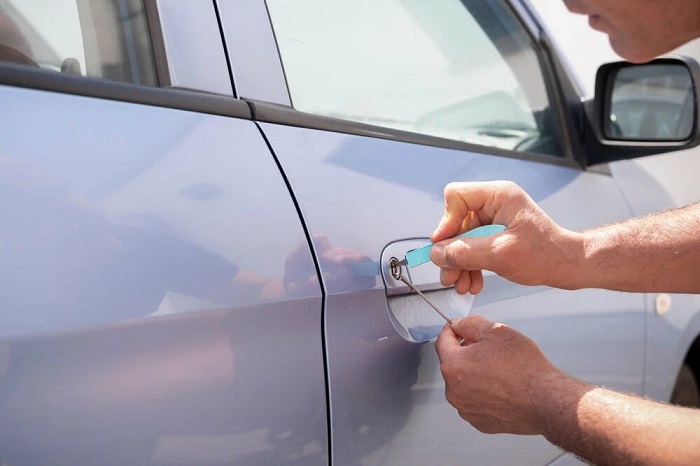
Vehicle unlocking is a procedure used to gain access to a car’s interior or its locks without causing damage—for instance, when keys have been lost, broken, or locked inside. To ensure that this service is both legal and safe, it is important to understand what documentation proves ownership, when the owner’s presence is required, and which actions should be avoided when attempting to open a vehicle on your own.
In this article, we will examine the key requirements and rules: how to verify ownership, what information professionals might request, how service requests are documented, and what measures are taken to prevent damage to the vehicle. We will also look at how to request vehicle unlocking services on https://lockdoc.ca and what to consider when choosing a service provider, ensuring the process is handled quickly, correctly, and in compliance with the law.
Legal Grounds for Accessing a Vehicle’s Interior or Trunk Without Keys
Accessing a vehicle’s interior or trunk without keys is permitted only when there is a legal basis—either established by law or derived from the owner’s rights. The mere “need” to open a car (for example, because the keys were left inside) does not grant third parties the right to unlock it; without the owner’s consent, such actions could be classified as unauthorized entry and may lead to legal liability.
The primary criterion for legality is having the right to control the vehicle or possessing authority granted by law. In most cases, the legal basis is the consent of the owner (or a legal possessor, such as someone holding a power of attorney, a rental agreement, or a lease). Other grounds include documented necessity—such as actions taken by authorized agencies in the line of duty, or urgent measures taken to prevent harm.
Owner Consent and Actions Performed on Behalf of the Owner
The most common basis for unlocking a vehicle is the explicit consent of the owner (or legal possessor).
While consent may be given verbally, it is advisable to document it—via a message in a chat app, a call recording, or a written confirmation—to minimize the risk of future disputes or claims. If a professional (such as an emergency locksmith or technician) performs the opening, they act on the owner’s behalf and must verify that the person requesting the service is indeed authorized to do so.
Even when consent is granted, there are limits to what is permissible: the level of access must be proportionate to the objective (for example, opening a door to retrieve keys, documents, or a child). Altering the vehicle’s structure or causing damage is only acceptable if it is objectively unavoidable. To protect all parties involved, it is standard practice to document the vehicle’s condition both before and after the work, and to specify the purpose of the opening, thereby preventing subsequent allegations of damage or the loss of property.
Authority of Government Agencies and Emergency Situations
Access without the owner’s consent is permitted only in specific, legally defined scenarios involving authorized government agencies—for instance, during procedural actions, security operations, detentions, inspections, or the seizure of property in accordance with established legal protocols. In such cases, the legal basis for the action must be formalized through official procedural documentation. All actions must strictly adhere to prescribed procedures and the scope of the agency’s authority; this often includes mandatory documentation, the presence of independent witnesses, or the use of video recording where required by law.
A separate category consists of emergency situations where gaining access is justified by the need to prevent an immediate threat to life or health, or to avert significant damage—for example, if a child or a vulnerable person is locked inside the vehicle, if there is a risk of fire, or if the vehicle is obstructing rescue operations. In such cases, urgent action is permissible; however, the relevant authorities should be notified at the earliest opportunity, and the reasons for the intervention must be documented to confirm its legitimacy and the absence of any self-serving intent.
- Always verify the existence of a legal basis—such as the owner’s consent, a power of attorney, a contract, official authorization, or an emergency situation.
- Document the circumstances: the purpose of the entry, the time, the presence of witnesses, and photographic or video evidence of the condition of the locks and doors.
- Limit the intervention to the absolute minimum necessary, ensuring that it does not exceed the scope of the justified objective.