
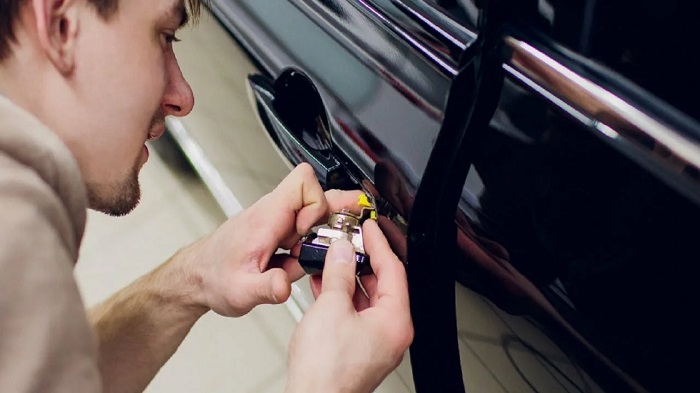
Car locksmithing is the careful opening of doors, trunks, or locks without causing damage when keys are lost, broken, or left inside. It’s important to understand that a competent approach saves time and reduces the risk of costly repairs to locks, handles, and seals.
This article contains practical ideas and tips from https://carlocksmithcambridge.ca to help you act safely and legally: from assessing the situation to choosing the appropriate method and preventing recurrence. The basic principle is simple: minimize intervention and avoid aggravating the problem by attempting to force opening.
Ideas and Tips for Safe Locksmithing
The main rule: do not use brute force. A broken handle, a bent door top, or a damaged seal will almost always cost more than careful assistance.
Why you shouldn’t open a car with “improvised means”
Attempts to open a car with a wire, ruler, screwdriver, or wedge often result in damage: scratched paintwork, door deformation, broken lock rods, window lift failures, and even alarm activation and subsequent blocking.
How to choose a specialist and prepare
- Confirm ownership: prepare the car documents or access to them (photos/electronic copies can be helpful).
- Describe the problem precisely: model, year, lock type, whether there is an alarm, what exactly is not opening.
- Specify the method: the priority is non-destructive opening and preserving the appearance.
- Check the reputation: reviews, transparent pricing, warranty on the work performed work.
If you need help quickly and without unnecessary steps, you can order a car unlocking service on the website (one time) and clarify the details of your model and situation in advance.
What to do immediately after unlocking
After gaining access, it is important to eliminate the root cause, otherwise the problem will recur.
- Checking the lock: If there was a jam or a broken piece, it is best to diagnose and clean the mechanism.
- Duplicate key: Make a spare key and store it separately from the main one.
- Battery condition: If the battery is discharged, check the battery, terminals, and alternator charge.
- Central lock settings: Disable autolocking in unsuitable scenarios if it triggers the problem.
Prevention: How to avoid getting into this situation again
Summary: Car break-ins should be as gentle and legal as possible, preserving the locks and body. The more calmly and precisely you act, the higher the chance of avoiding damage and unnecessary expenses.
When Intervention Is Justified: Legality, Risks, and Owner Liability
Car break-ins are only permitted in situations where you are acting with your own vehicle or have a direct and verifiable right to dispose of it (for example, under a power of attorney, as a representative of the owner company, with the owner’s consent). Any actions “on someone else’s car” without legal grounds may be considered illegal, even if the intentions seem “harmless.”
Even legal break-ins carry risks: damage to seals, paintwork, glass, lock cylinders, wiring, and security system components. Therefore, the key principle is simple: intervention is justified when it minimizes damage, does not exacerbate the problem, and is carried out with an understanding of the consequences and responsibilities.
Bottom Line: When to Act Independently and When to Stop
Justified intervention is action within the bounds of property rights and necessity, with the safety of people and the safety of the vehicle as a priority. If there are any doubts about the legality, the risk of damage increases, or the situation involves the security system/electrics, it is wiser to seek professional help and document your actions.
- Acceptable: you are the owner/authorized person, the car is yours, the goal is to restore access without unnecessary damage.
- Undesirable: no proof of rights, lack of skills/tools, high risk of breaking the lock or damaging the door.
- Dangerous: attempts at “forceful” opening, tampering with the wiring, bypassing the factory immobilizer or alarm without understanding the circuit diagrams.
- Check the grounds: make sure you have the right to open this particular car (documents, power of attorney, proof of ownership).
- Evaluate the risks: which is cheaper and safer – a careful method/waiting for a spare key or repairing after damage?
- Select the minimum Traumatic path: start with the most gentle solutions and stop at the first sign of damage.
- Record your actions: in controversial situations, before and after photos/videos, and receipts from the service center/tow truck are helpful.
- Be responsible: you are responsible for the consequences of any intervention – from repair costs to possible claims if your rights to act are not confirmed.