
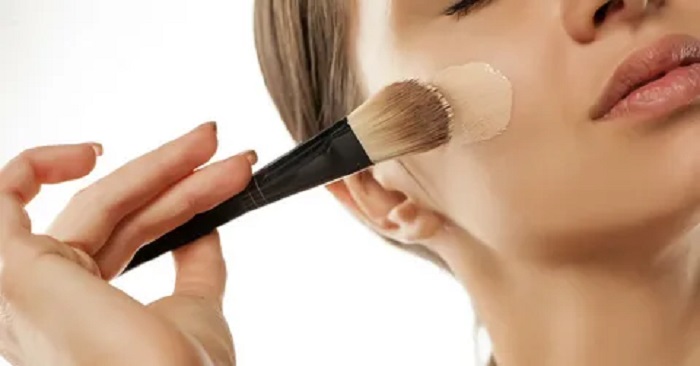
Why does foundation look smooth at 8 a.m. and patchy by lunch? Usually the product isn’t to blame: dead skin cells, dehydration and fine facial hair create an uneven surface that pigment clings to, and no primer can fully hide what’s underneath. Fix the surface first, and the foundation you already own will often look like a more expensive one.
Anyone who’s worked in a furniture workshop knows the rule. A lacquer finish only looks as good as the sanding beneath it, and a thicker coat over a rough board makes every flaw more visible. Skin behaves the same way, which is why piling on more product to hide patchiness is the fastest route to cakey makeup.
Is it the foundation or the skin underneath?
Your makeup tells you what’s going on if you look closely around midday. Patches that cling around the nose and chin point to flaking. Foundation that settles into fine lines under the eyes suggests dehydration. A fuzzy, powdery look in side light comes from vellus hair, and separation on the forehead and nose is an oil problem. That’s why so many people book dermaplaning in Fort Worth studios before a wedding or photo shoot: the treatment tackles two of those four causes, dead cells and peach fuzz, in a single appointment.
What does peach fuzz have to do with makeup?
Peach fuzz, the fine, pale vellus hair on the cheeks and jawline, catches powder and liquid foundation the way a sweater catches lint. Each tiny hair holds a little pigment, and in daylight the result reads as texture even on smooth skin.
Professional dermaplaning removes that hair along with the top layer of dead cells. The esthetician holds the skin taut and works a sterile blade at about a 45-degree angle in short, feathery strokes, which has little in common with dragging a drugstore razor across dry skin. Whichever med spa in Fort Worth you book with, ask whether the appointment ends with a hydrating mask. Freshly dermaplaned skin absorbs products well, so it pays to put something useful on it.
Dermaplaning isn’t for everyone, though. Active cystic acne, cold sores, eczema or psoriasis flare-ups, sunburn and a recent peel or laser treatment are all reasons to wait.
Exfoliation timing: why the night before is too late
Three to five days before an event is the sweet spot for exfoliating. Fresh exfoliation, whether it comes from an acid, a scrub or a blade, can leave skin slightly pink and sensitive for a day, and foundation grabs onto raw patches just as it grabs onto flakes.
The same timing applies to anything strong in your routine. Pause retinol and harsh exfoliants for three to five days before a dermaplaning appointment, and afterward go easy on makeup for the first 24 hours where you can. Small scheduling details like these decide whether a treatment helps your makeup or fights it.
How do you hydrate skin so makeup doesn’t crack?
Apply moisturizer to slightly damp skin and give it five to ten minutes to settle before foundation goes on. Layering makeup over a moisturizer that’s still wet makes the two slide around together, and that’s where most streaks begin.
Pick your moisturizer by how your skin feels at 3 p.m. instead of how it feels right after washing. Shiny by lunch? A light gel-cream under a thin primer is enough. Tight and flaky? Look for humectants such as glycerin or hyaluronic acid, sealed in with a cream that has a little oil in it. A hydrating mist between layers helps a bit, but it can’t rescue skin that’s dry overall, and a bedroom humidifier during heating season does more over a week than any spray does in a morning.
Application habits that change the finish
Good prep can still be undone by technique, so a few habits are worth checking:
- Apply foundation in thin layers and build coverage only where you need it.
- Press product in with a damp sponge; rubbing lifts any flakes that are left.
- Blot oil with a tissue before reaching for more powder.
- Set only the areas that crease or shine, and leave the cheeks alone.
- Replace a dried-out sponge, since a stiff one deposits more product than it blends.
Once these habits sit on top of decent skin prep, cakey makeup usually stops being a daily problem, and most people find they reach for less product than before. That’s the clearest sign the surface underneath has changed.