
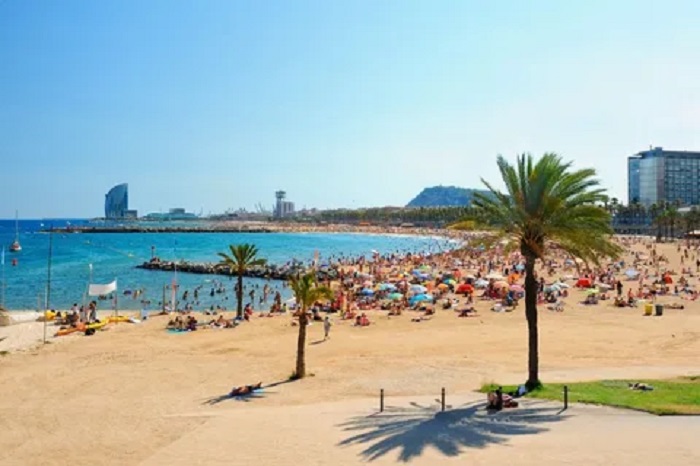
Barcelona is a city where it’s easy to tailor a vacation: a morning stroll through the Gothic Quarter and La Rambla, an afternoon exploring Gaudí’s modernism at the Sagrada Familia and Park Güell, and an evening stroll along the Barceloneta embankments and dinner overlooking the sea. To see more and save time on logistics, plan your walking areas, museum schedules, and convenient transportation options in advance, including private transfers in Barcelona and Catalonia.
For a packed itinerary, add panoramic views from Montjuïc, markets like the Boqueria, a stroll through the Eixample with Casa Batlló and Casa Milà, and a day or two for excursions to Montserrat, Sitges, or Girona. Alternate cultural hotspots with beach relaxation, and leave time for “chance” discoveries—cozy squares, cafes, and small galleries that make Barcelona so vibrant.
How to plan a Barcelona vacation: itineraries by time of day, neighborhood, and budget
Plan Barcelona along three axes: time of day (to avoid heat and queues), neighborhoods (to reduce travel by public transport), and budget (to understand in advance where you can save money and where it’s best to spend). It’s best to choose a “base”—your neighborhood—and plan 2-4-hour walks around it, with breaks in between.
The optimal rhythm for the city: morning—iconic sites; afternoon—museums/beach/siesta; evening—panoramas, tapas, and strolls. This way, you’ll have time to see the main sights without getting tired, and the routes will logically “gather” in neighboring neighborhoods, rather than devolve into chaotic back-and-forth.
Routes by Time of Day and Neighborhood
It’s best to spend the morning visiting popular attractions: you’ll start the day at a leisurely pace and save time on queues. A central option: from Plaza Catalunya along Passeig de Gracia to the modernist architecture and then on toward the Sagrada Familia. A seaside option: Barceloneta and the embankments are perfect for an early stroll and photos, while there are fewer people.
During the day, it’s convenient to switch to “closed” activities or a relaxing break: a museum, a market, a shaded café, or a beach with short dips into the water. If you’re in Eixample, it’s logical to combine architecture and museums; If you’re in the Gothic Quarter, explore the narrow streets, stop at a market, and stop at a coffee shop. Plan your daytime itinerary so it’s close to your lunch spot and doesn’t require unnecessary transfers.
In the evening, Barcelona reveals itself through walks and views: climb to vantage points (for example, towards the hills), and then choose a neighborhood for dinner and ambiance. For a more classic experience, El Born and the center are suitable, while for a more local atmosphere, Gracia with its squares and small bars. Keep your evening itineraries shorter but more action-packed: one panoramic point + one neighborhood for dinner – that’s enough.
Budget: How to Plan a Day “Economy / Comfort / Maximum Experiences”
Create a plan with Barcelona airport transfers so that expensive points don’t “eat up” your entire vacation: for each paid activity, add 1-2 free activities – a walk around the neighborhood, the beach, observation decks, parks. The most common overspending in Barcelona isn’t on entrance tickets, but on spontaneous taxis, unnecessary transfers, and meals at tourist spots. So saving money starts with choosing the right route.
- Economy: walking routes through neighborhoods (Gothic > El Born > promenade), beach, parks, markets for snacks; choose museums selectively, not every day.
- Comfort: 1 paid “point of the day” (architecture/museum) + 1 neighborhood walk + 1 good place for dinner; allow time for coffee breaks and leisurely shopping.
- Maximum experience: book popular spots in advance for convenient slots, add panoramic sunset locations and a gourmet evening; Leave the morning free for the main “hit” of the day.
To keep your plan flexible, make a list of three options for each day: “sunny” (beach/parks), “hot” (museums/shade/short runs), and “energy in the evening” (viewpoint + dinner in the chosen area). This way, you won’t be tied to one scenario and can change the pace without losing the logic of the route.