
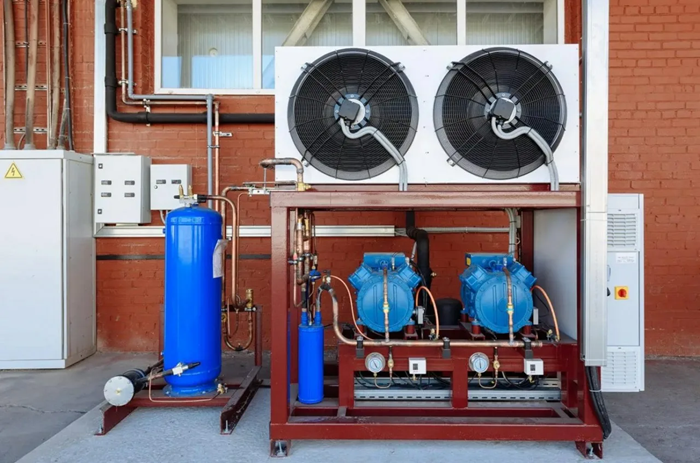
In the food service, retail, and pharmaceutical industries, refrigeration equipment is not merely an appliance but critical infrastructure upon which business continuity depends.
The traditional repair approach—where a business owner calls a technician only after the temperature in the cooling unit has reached a critical level—is considered economically inefficient in today’s business environment.
Company Profile
Operating under the Cold Commercial brand, the company exemplifies a new generation of service contractors shifting from a “firefighting” model to that of a “systems integrator.” Their core philosophy is that commercial refrigeration is a complex thermodynamic system requiring continuous monitoring rather than sporadic intervention.
Commercial equipment operates under a unique set of demands, specifically a 24/7 workload. Unlike household refrigerators that cycle on and off, professional units in Los Angeles run continuously under heavy strain. Cold Commercial focuses on in-depth technical audits. This means their specialists do more than just recharge the system with refrigerant; they analyze energy consumption (amperage loads), the condition of line insulation, and heat exchange efficiency. This approach allows them to identify issues at the stage where the unit is “still cooling but consuming 20% more electricity”—a hidden financial loss for the business owner.
From Emergency Repair to IoT Monitoring
B2B refrigeration services today fall into three key categories, and Cold Commercial covers them all, creating a comprehensive safety ecosystem for the client.
The first category is emergency technical support. Maintaining a fleet of vans stocked with the most frequently needed spare parts enables Cold Commercial to resolve up to 80% of service requests during the initial visit. The second area of focus is scheduled maintenance. Specialists perform deep cleaning of condenser units to remove dust and grease, check compressor oil acidity levels, and calibrate thermostats. For supermarket chains or large catering companies, Cold Commercial implements maintenance schedules that allow for even budget distribution and help avoid emergency expenses.
The third—and most technologically advanced—area is the integration of remote monitoring systems (IoT Refrigeration Monitoring). This modern solution involves installing wireless temperature and humidity sensors that transmit data to a cloud service in real time.